BrokeAss Gourmet

BrokeAss Gourmet

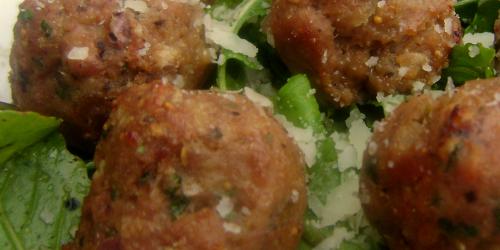
Turkey-Fig Meatballs

  • Prep Time 0:20
  • Cook Time 0:16
  • Estimated Cost $11.50
  • 3 Comments

Subtly sweet fig jam keeps these unique meatballs moist without needing eggs or oil. The earthy fig perfectly complements the turkey, while salty Parmesan makes it impossible to eat just one. Feel free to use store-bought fig jam if you don’t have time to make it at home.

Ingredients

  • 1 lb lean ground turkey $3
  • 1/2 onion, diced finely $0.50
  • 3 cloves garlic, minced Pantry
  • 1 small bunch parsley, chopped finely $1
  • 3 tbsp fig jam $4
  • 3 tbsp grated Parmesan, plus more for garnish $3.50 for 8 oz
  • 4 tbsp bread crumbs $2 for 16 oz.
  • 1 pinch each salt and pepper Pantry
  • 4 cups arugula, rinsed and dried $1.50
  • 2 tsp olive oil Pantry
  • 2 tsp balsamic vinegar Pantry

Directions

  1. Preheat oven to 400 degrees F. Lightly grease 2 12-cup muffin tins or a broiler pan.
  2. Use your hands to mix turkey, onion, garlic, parsley, fig jam, Parmesan, bread crumbs, salt and pepper together in a mixing bowl until completely combined. Wet your hands and form the turkey mixture into about 24 balls. Place the balls into the prepared muffin cups or onto the broiler pan and bake for 13-16 minutes, or until fully-cooked and juicy. Allow to cool 5 minutes.
  3. Dress the arugula with the olive oil and balsamic vinegar. Toss well.
  4. Serve the meatballs warm, over a bed of arugula, garnished with Parmesan, either on individual plates or on a large platter with toothpicks.

Makes 24 meatballs.

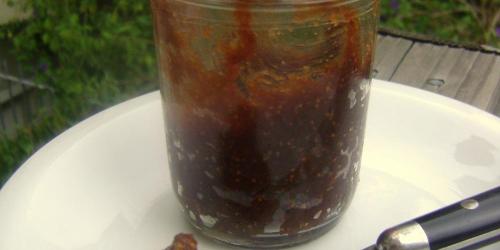
Balsamic Fig Jam

  • Prep Time 0:05
  • Cook Time 0:25
  • Estimated Cost $4.00
  • 36 Comments

As you might know, figs are a big favorite of mine. Since they’re not in season for another few months, I’ve been feeling seriously deprived lately. Recently, my friend and fellow fig enthusiast Sue suggested I get my hands on some fig jam. I thought that sounded like a good idea, so I decided to make my own. The result was something that tempts me to dip a spoon into its jar every time I open the refrigerator. Try it with bread, cheese and prosciutto, swirled in oatmeal, or as the jelly part of a peanut butter and jelly sandwich.

Ingredients

  • 1 lb dried figs (preferably Black Mission), ends removed $4
  • 1/2 cup balsamic vinegar Pantry
  • 2 tbsp honey Pantry
  • pinch of salt Pantry

Directions

  1. Combine all ingredients in a saucepan. Add 1/2 cup water.
  2. Cook covered, over low heat for 20-25 minutes, until all liquid is absorbed and figs are very soft.
  3. Puree using a blender, food processor or immersion blender.
  4. Allow to cool before serving.

Makes about 1 1/2 cups jam.

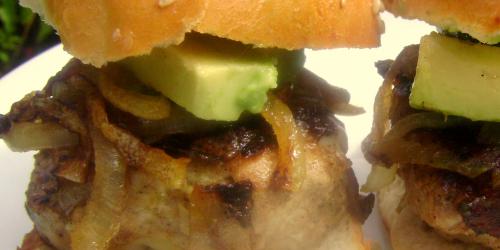
Turkey-Cheddar Sliders

  • Prep Time 0:15
  • Cook Time 0:15
  • Estimated Cost $10.00
  • 7 Comments

I got a little overexcited today at Trader Joe’s. There I was, doing my regular shopping, picking up eggs, half-and-half, coffee, etc, when I stumbled upon mini hamburger buns in the bread aisle. In a pack of 8 for less than $1.50, I pretty much couldn’t resist. My very audible gasp of exhilaration made the cute guy shopping next to me snicker, but I didn’t care. I just threw them in my basket, made a dash for the ground turkey and the rest is history.

Ingredients

  • 3/4 lb lean ground turkey $3
  • 2 tbsp extra virgin olive oil, divided Pantry
  • 1 onion, half diced, half sliced thinly $0.50
  • 2 cloves garlic, minced Pantry
  • 2 oz. white cheddar cheese, cut into 1/8" pieces $3.50 for 8 oz
  • salt and pepper to taste Pantry
  • 8 miniature hamburger buns (or 3" dinner rolls) $1.50
  • 1 avocado, sliced into 1" pieces $1.50

Directions

  1. Heat 1 tbsp olive oil in a small frying pan over low. Add sliced onion and allow to caramelize while you prepare the rest of the recipe. This should take 12-15 minutes.
  2. In a mixing bowl, combine the turkey, garlic, diced onion, cheddar cheese and a generous pinch of both salt and pepper. Use your hands to mix the ingredients thoroughly. Form mixture into 8 2" patties. Set on a clean plate. Be sure to wash your hands well after working with raw turkey.
  3. Brush a grill pan or cast iron pan with the remaining tbsp of olive oil and heat to medium-high heat. Place patties in pan and cook until firm on the inside and nicely grilled on the outside, about 4-5 minutes on each side. Cut open one burger to test done-ness before serving.
  4. To assemble burgers, place a miniature turkey burger on each bun's bottom half. Garnish each burger with caramelized onions and a couple of slices of avocado. Top with each bun's top half and secure with a toothpick if necessary.

Makes 8 sliders.

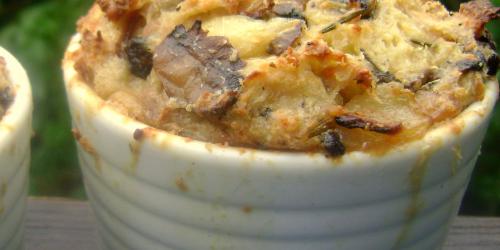
Savory Mushroom-Parmesan Bread Pudding

  • Prep Time 0:20
  • Cook Time 0:30
  • Estimated Cost $9.00
  • 6 Comments

I went to a dinner party recently and chatted with a guy who, upon hearing about BrokeAss Gourmet, expounded on the glory of stuffing: “It’s so good and so cheap. I eat it on its own for dinner all the time.” As it happens, I’m not a huge fan of stuffing. I think it tends to be overly salty and uninteresting and I couldn’t imagine ever eating a bowl of stuffing for dinner.

Bread pudding, however, is a different story (don’t worry, I don’t actually eat bread pudding on its own for dinner…but I totally could). So I figured, why not employ bread pudding’s custard-y goodness in a savory stuffing-like side dish? The result was something I’d be proud to serve alongside roasted meat at a fancy dinner, or even with a green salad for a classy, inexpensive vegetarian meal.

Ingredients

  • $1 baguette, preferably stale, cut into 1" cubes $1.50
  • 1 2/3 cup milk (whole, 2% or 1%) $1 for a pint
  • 2 eggs, lightly beaten $1.50 for 6
  • 2 tbsp olive oil, plus more for greasing pan(s) Pantry
  • about 6 button mushrooms $1
  • 1 onion, diced $0.50
  • leaves from one sprig fresh rosemary $1
  • 1/4 cup grated Parmesan, plus more for sprinkling $3.50 for 10 oz.
  • salt and pepper to taste Pantry

Recipe Serves 4

Directions

  1. Preheat oven to 375 degrees F. Lightly grease an 8-inch pie pan or 4 4-inch ramekins. Set aside.
  2. Combine milk and eggs in a mixing bowl and whisk lightly to combine. Add bread cubes and stir to ensure all are thoroughly soaked. Set aside.
  3. Heat the olive oil in a frying pan over low heat. Add onions and cook slowly for 8-10 minutes. Increase to medium and add the mushrooms. Cook for another 2-3 minutes until mushrooms begin to shrink. Remove from heat.
  4. Stir the onion-mushroom mixture into the soaking bread. Gently fold in the rosemary and Parmesan. Season with salt and pepper to taste.
  5. Spoon the bread mixture into the prepared pan or ramekins. Sprinkle with a pinch of Parmesan and bake for 25-30 minutes, or until puddings set and the tops are golden-brown and crisp. Allow to cool 5 minutes before serving.

The go-local movement has hit the beer industry. Whereas finding heirloom tomatoes grown within a day’s walk of your home has been a cinch from day-one, chances are your favorite brewery still is making its beer from ingredients grown thousands of miles away, on the barley fields of the Great Plains and in the hop yards of the Pacific Northwest.

But a handful of brewers have begun to liberate themselves from dependence on these vast agricultural industries. Sierra Nevada Brewing Company in Chico, CA released a historic beer last fall: the 2009 Estate Brewers Harvest Ale ($9.99, 22-ounces). This historic IPA is made with barley grown not a mile away and freshly picked hops grown behind the brewery. There might not be a beer more locally based than this one – except that the 100-ton barley crop was sent to a Wisconsin malt house for the microbial processing stage that turns starch into sugar. (Sort of cancels out the whole point, doesn’t it?)

Lakefront Brewery in Wisconsin also made a totally local beer last fall. The Local Acre Lager ($4.99, 22 ounces) was produced from organic hops and barley harvested within 100 miles of the brewery. Owner Russ Klisch contracted with area farmers to plant specific hop and barley varieties for his beer, which he plans to brew year-round. Through the Local Acre Lager, Klisch is hoping to help rebuild local production of barley and hops and, eventually, transition his entire beer production into relations with nearby growers. His efforts will be worth watching in the near future.

In 2009 Deschutes Brewery released a celebration beer commemorating Oregon’s 150th year of statehood. The beer was made of all Oregon ingredients – easy to do, perhaps, in the hop country of the Northwest. Rogue Ales, too, has just released an all-local beer, too, the Dirtoir Black Lager ($5.99, 22-ounces), for which all the ingredients, including river water and glass for the bottles, were sourced or produced within the state.

But with so much yin, let’s talk yang. Dogfish in Delaware, the weird-beer craft brewing giant, makes one ale that brazenly defies the local food movement: Pangaea ($12.99, 750 ml), a concept beer in a fancy wine bottle and brewed with ingredients sourced from all seven continents. North American corn, Asian rice, South American quinoa, Australian crystallized ginger, African Muscavado sugar, European yeast and Antarctic ice water all go into the brew pot. The concept behind this beer is the entertainment; identifying the ingredients in the aroma and taste may be a task beyond the sensory skills of most. Though the crystallized ginger is easily tasted (like pumpkin pie), the quinoa and various grains play furtively in the background. I would dare say even the sharpest beer tasters would be hard pressed to detect the Antarctic water.

Back to the local beers, the Local Acre Lager ranks among the best lagers I’ve had. The beer emits a heady, thick aroma of malt and grain. In the mouth, a citrus tang and faint taste of bubblegum counter the thick syrupy body. This is a hearty, full and satisfying lager. Interesting to note is that Klisch says the beer’s Lacey barley grown in Wisconsin tastes markedly more “biscuity” than that grown in Canada or North Dakota – and this disparity can be tasted in the beer, he says. Sierra Nevada’s estate ale sizzles with brilliant hops and runs sweet and sticky. Head brewer Steve Dresler believes the soil components unique to the land adjacent to the brewery play a role in its particular flavors. Perhaps, though only the sharpest palate could detect such subtleties.

Breweries too numerous to name now grow a limited amount of hops on or near the premises for use in seasonal fresh-hop beers, which are usually released in the fall and often celebrated at regional fresh hop beer festivals. Few breweries, though, have the space to entirely transfer their agricultural needs into their own backyards. Sierra Nevada alone would need thousands of acres of land to grow all its own hops and barley, and so we can expect barley fields to remain a feature of the continental Midwest country.

Beer, though, will always be just a train ride away, and perhaps that’s as local as we’ll get.

Category:

Tags: ,

Share this Recipe: Share on Facebook Tweet This! Pin it on Pinterest